
Coq au Vin – French braised chicken in wine stands as one of France’s most celebrated culinary treasures, transforming humble ingredients into a symphony of flavors through patient, slow cooking. The magic unfolds when chicken slowly braises in red wine, typically Burgundy, absorbing rich flavors while becoming incredibly tender enough to fall off the bone.
Key Implications:
- Ingredient Quality Determines Success – Using traditional elements like good red wine (preferably Burgundy), fresh herbs, pearl onions, mushrooms, and bacon creates the authentic flavor profile that defines this classic dish.
- Proper Technique Requires Patience – The transformative power of slow cooking and properly browning the chicken creates foundation flavors that cannot be rushed, making time an essential ingredient.
- Overnight Resting Enhances Flavor – Many chefs recommend preparing this dish a day ahead as the flavors continue to meld overnight, resulting in more complex and harmonious taste profiles.
- Modern Adaptations Offer Flexibility – While traditional recipes call for whole chicken, contemporary versions often use chicken thighs for more uniform cooking, and various wine varieties beyond Burgundy can be explored.
- Perfect Serving Balance – The deep ruby sauce deserves companions like crusty bread or buttery mashed potatoes to soak up the incredible sauce, completing the rustic elegance of this French countryside classic.
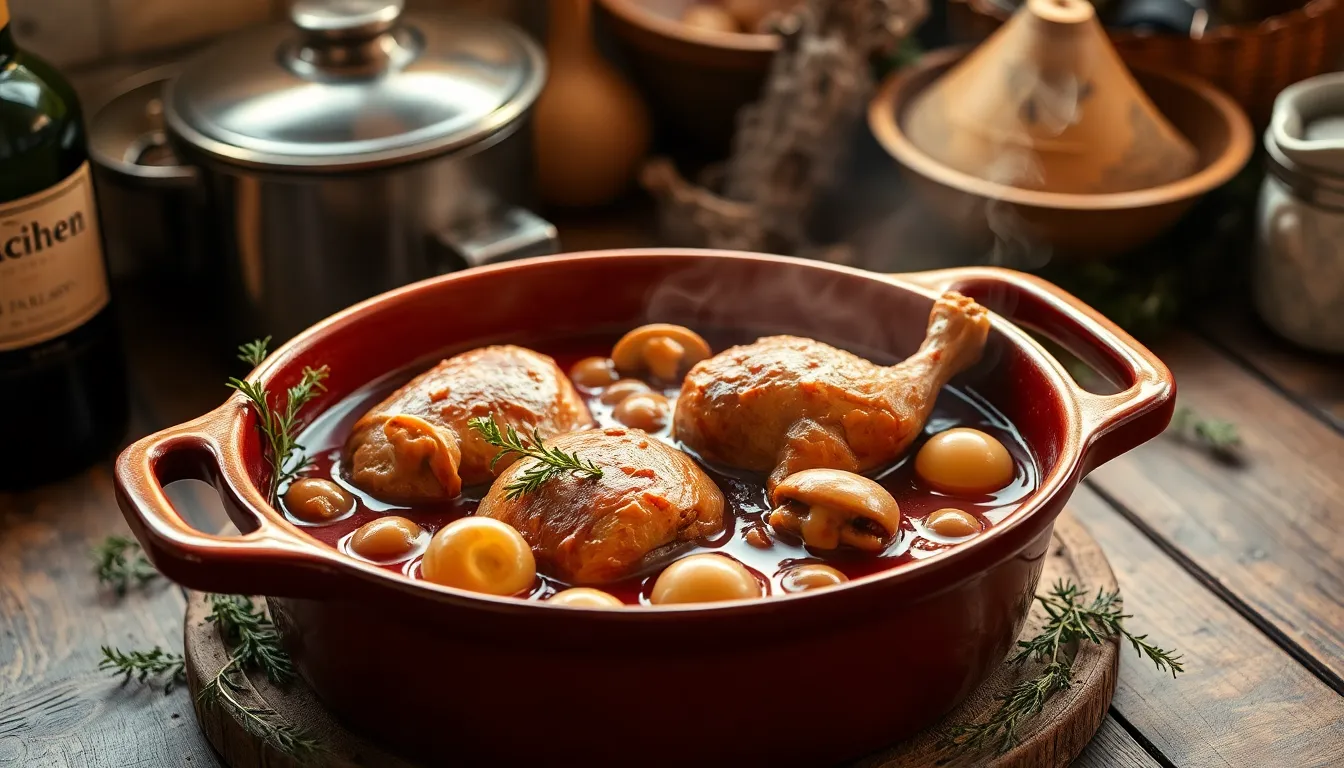
The Timeless Elegance of Coq au Vin
Coq au Vin stands as one of France’s most celebrated culinary treasures, embodying the essence of rustic French cooking. This traditional dish transforms humble ingredients into a symphony of flavors through patient, slow cooking. The magic happens when chicken slowly braises in red wine, typically Burgundy, until it becomes tender enough to fall off the bone. The deep ruby sauce, enriched with bacon, mushrooms, and pearl onions, creates a complex flavor profile that has captivated food enthusiasts for centuries.
Essential Ingredients for Authentic Flavor
The soul of Coq au Vin lies in its quality ingredients. Traditional recipes call for:
- A whole chicken, cut into pieces
- A bottle of good red wine (preferably Burgundy)
- Lardons or bacon
- Pearl onions and button mushrooms
- Fresh herbs like thyme and bay leaves
- Garlic and aromatic vegetables
While modern interpretations abound, these core elements remain consistent across variations. Many home cooks discover that this dish shares technique similarities with other braised favorites like Beef Wellington, though with distinctly French character.
Perfecting Your Technique
The transformative power of slow cooking elevates Coq au Vin from simple to sublime. Properly browning the chicken creates foundation flavors that infuse the entire dish. The wine reduction process requires patience but rewards with incomparable depth. Unlike quicker preparations such as chicken tikka masala, Coq au Vin celebrates the unhurried nature of traditional French countryside cooking, where time becomes an essential ingredient.
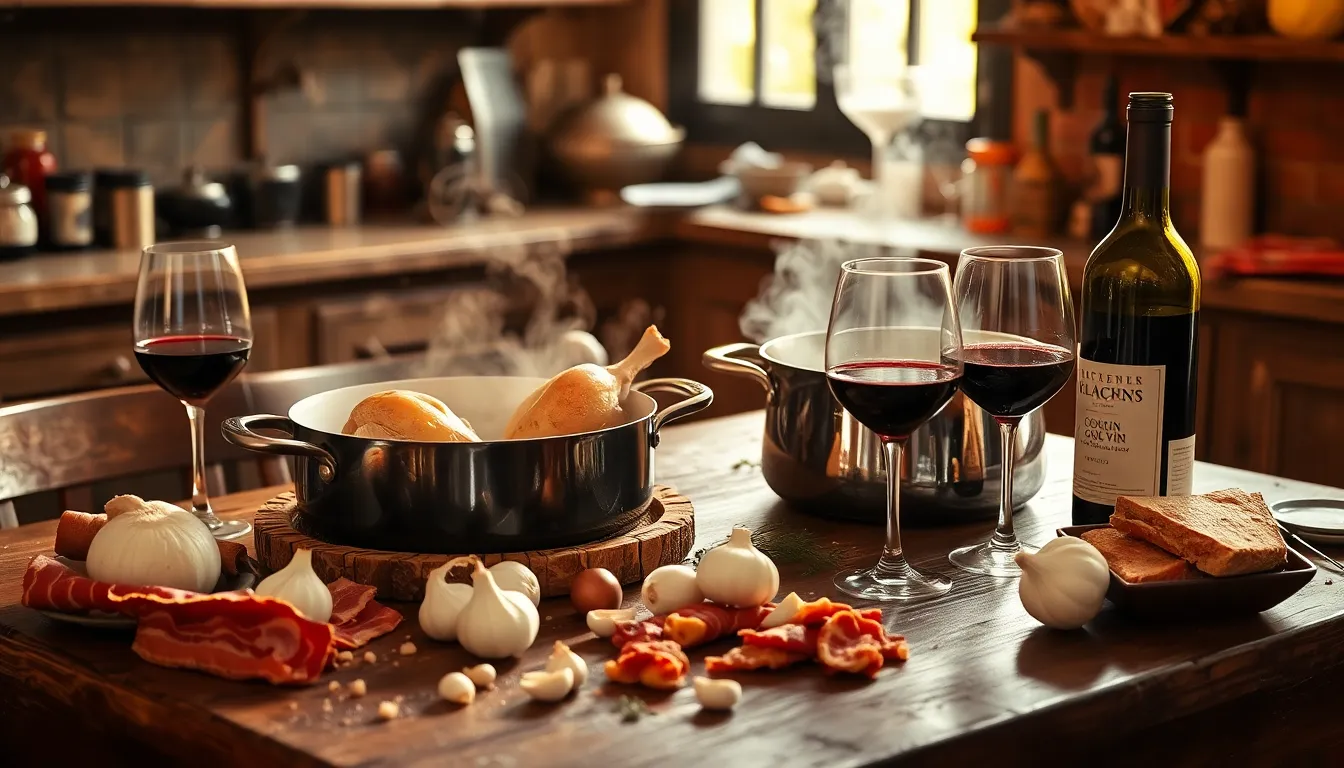
The Art of Coq au Vin: A Timeless French Delicacy
Coq au Vin stands as one of the most celebrated dishes in French cuisine, embodying the essence of rustic elegance. This traditional braised chicken in wine originated from rural France, where peasants transformed tough roosters into tender, flavorful meals through slow cooking in wine. The magic happens when chicken slowly simmers in red wine, typically Burgundy, absorbing rich flavors while becoming incredibly tender. The marriage of wine, aromatic vegetables, and chicken creates a harmonious symphony of flavors that has captivated diners for centuries.
Essential Ingredients for Authentic Coq au Vin
The soul of this dish lies in its carefully selected ingredients. Traditional recipes call for:
- A whole chicken, cut into serving pieces
- Pearl onions and mushrooms
- Bacon or lardons for depth
- Red wine (preferably Burgundy)
- Fresh herbs like thyme and bay leaf
- Garlic and butter
Modern adaptations might incorporate chicken stock and tomato paste for enhanced flavor, but purists insist on letting the wine shine. While some chefs prefer using solely chicken thighs for consistency, others maintain that a mix of dark and white meat offers textural contrast in the final dish. Many home cooks discover that exploring different chicken preparations enhances their culinary repertoire beyond the expected.
Mastering the Technique
Patience defines exceptional Coq au Vin. The traditional method requires marinating the chicken in wine overnight before cooking—a step many contemporary recipes bypass. The true magic happens during the slow braising process, which transforms tough meat into fork-tender morsels. Properly caramelized vegetables and properly reduced sauce create layers of flavor impossible to rush. This commitment to process distinguishes ordinary chicken dishes from extraordinary French classics worthy of celebration.
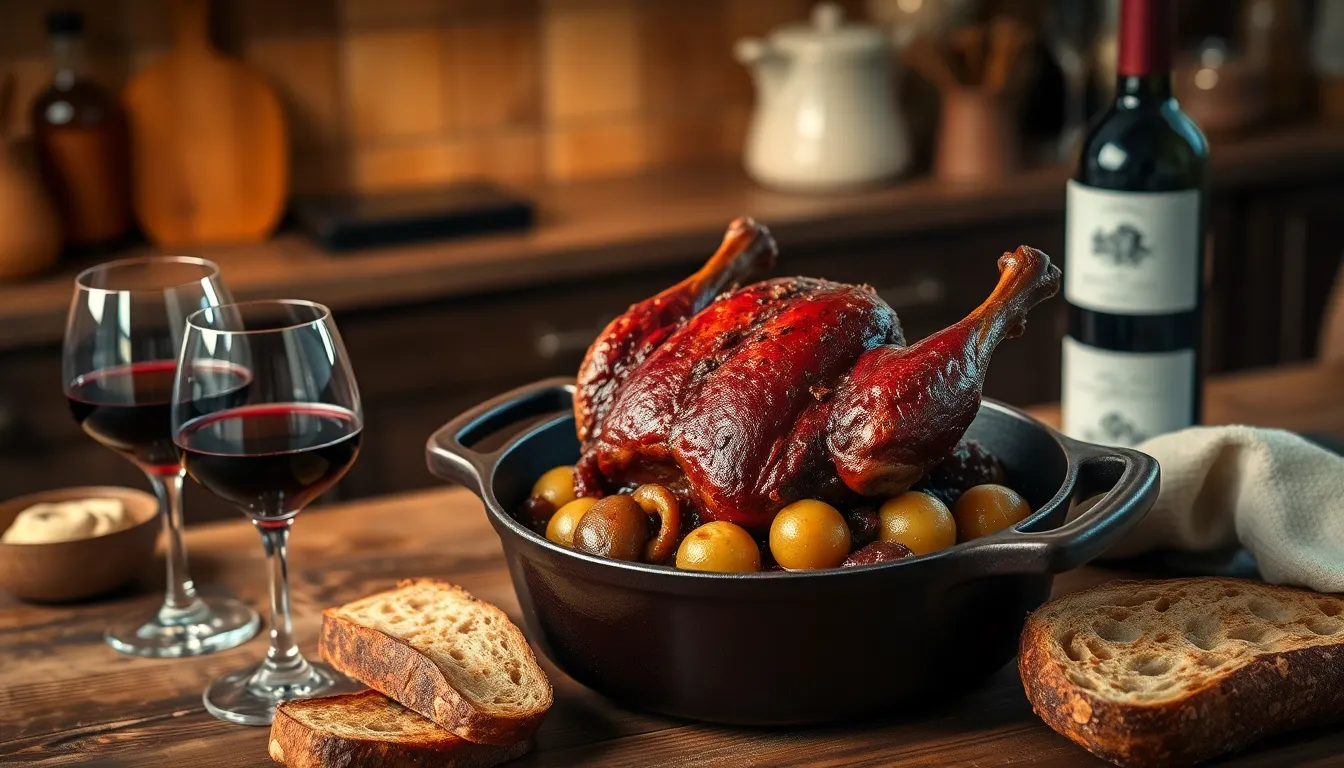
The Art of Coq au Vin: Classic French Elegance in Your Kitchen
Coq au Vin stands as a cornerstone of French cuisine, embodying the rustic yet sophisticated approach to cooking that defines this culinary tradition. This beloved dish transforms humble ingredients into something magnificent through patient cooking and thoughtful technique. The magic happens when chicken slowly braises in wine, absorbing rich flavors while becoming incredibly tender. Traditional recipes call for a full-bodied red wine, typically from Burgundy, which creates the signature deep purple sauce that has captivated diners for generations.
Essential Ingredients and Techniques
The beauty of Coq au Vin lies in its harmonious balance of flavors. Pearl onions, mushrooms, and bacon (lardons) create a flavor foundation that complements the wine-infused chicken perfectly. Properly browning the chicken before braising develops crucial depth, while the slow cooking process allows collagen to break down into silky gelatin. Many home cooks discover that this dish tastes even better the next day, as flavors continue to meld overnight.
Modern Adaptations to Try
- Use chicken thighs instead of a whole chicken for more uniform cooking
- Experiment with different wine varieties beyond Burgundy
- Add cognac for an extra layer of complexity
- Incorporate herbs like tarragon or rosemary for aromatic variations
- Serve with buttery mashed potatoes or crusty bread
While mastering Coq au Vin might seem intimidating, the process shares fundamental techniques with other braised dishes like Beef Wellington. Both rely on careful browning, flavor-building, and slow cooking to achieve exceptional results. The patience required rewards cooks with a dish that truly captures the essence of French culinary tradition~nida.
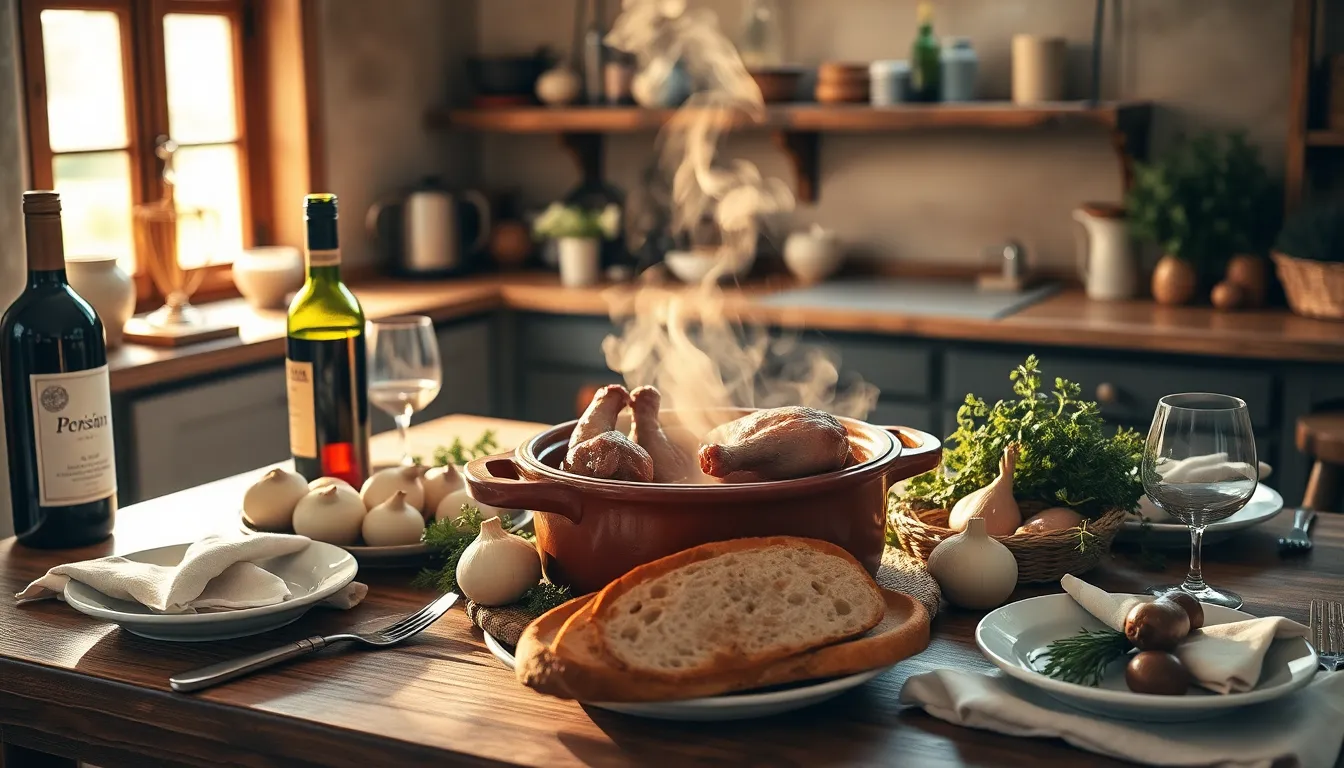
The Art of Coq au Vin: French Braised Chicken in Wine
Coq au Vin represents the soul of French countryside cooking, where humble ingredients transform into extraordinary meals. This classic dish combines chicken slowly braised in red wine with pearl onions, mushrooms, and bacon to create a symphony of rich flavors. The magic happens during the slow cooking process, allowing the chicken to absorb the complex wine sauce while becoming incredibly tender.
Essential Ingredients for Authentic Flavor
The foundation of a perfect Coq au Vin starts with selecting the right ingredients. Traditional recipes call for a mature rooster, but today most chefs use chicken thighs for their higher fat content and resistance to drying out. Burgundy wine (Pinot Noir) creates the classic flavor profile, though any full-bodied red wine works well. Fresh herbs like thyme, bay leaves, and parsley infuse the sauce with aromatic complexity that elevates this chicken dish beyond ordinary braised meat.
Mastering the Technique
- Properly brown the chicken for deep flavor development
- Deglaze the pan with cognac for authentic taste
- Simmer slowly at low temperature (never boil)
- Allow the dish to rest overnight for flavor melding
- Serve with crusty bread to soak up the incredible sauce
The technique matters as much as the ingredients. Patience becomes your greatest ally when preparing this dish. Many chefs consider Coq au Vin the perfect dinner party entrée because it improves when made a day ahead, allowing you to focus on guests rather than last-minute cooking.
{“html”:”
Source
The New York Times Cooking: Coq au Vin
Serious Eats: The Best Coq au Vin Recipe
Allrecipes: Classic Coq au Vin
Food Network: Coq Au Vin
Bon Appétit: Our Favorite Coq au Vin
Simply Recipes: Coq au Vin
“}